
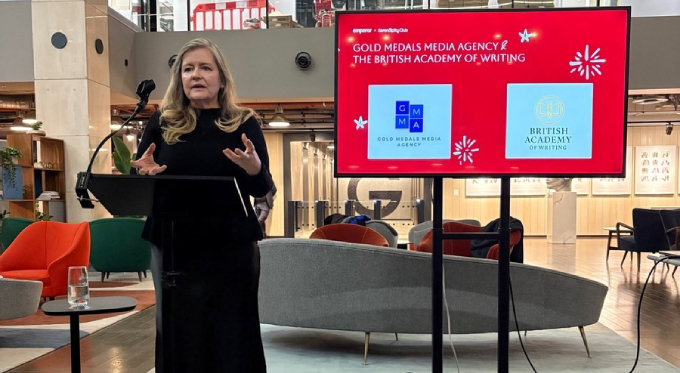
Alison Kervin OBE is a leading British journalist, author and keynote speaker whose career has reshaped expectations in sport, media and leadership. She is best known as the first female Sports Editor of a UK national newspaper, a landmark achievement that placed her at the centre of elite sporting conversation for nearly a decade. With close to forty years in the media, Alison brings authority, warmth and hard-earned insight to the stage, speaking on confidence, resilience and performing under pressure.
Before journalism became her profession, sport was Alison’s foundation. She was a member of the England gymnastics squad and went on to qualify as a coach in ten different sports, giving her an unusually deep understanding of preparation, discipline and mindset. In 1991, she became the first woman to referee a rugby match at Twickenham, a moment that captured her willingness to step into spaces where women were rarely welcomed. Alison later joined the Rugby Football Union, working with elite players and administrators before moving fully into publishing and journalism. These formative years shaped her belief that confidence is built, not inherited, and that resilience is learned through repeated exposure to pressure. Alison now advises organisations as the Founder of Gold Medals Media, a communications agency working across PR, media training and crisis communication.
Alison’s editorial career is defined by a series of senior leadership roles. She was appointed Editor of Rugby World magazine, later becoming Publisher of IPC Sports Titles, overseeing leading publications including Rugby World and Golf Monthly. She joined The Times as Rugby Editor, then rose to Chief Sports Feature Writer, where she authored a weekly interview series that ran for five years and featured more than 250 global figures. Alison went on to become Chief Sports Interviewer at The Daily Telegraph before making history in 2013 as Sports Editor of the Mail on Sunday, a position she held for eight years. During this time, she led a sustained and influential concussion campaign that changed how head injuries were treated across sport. Her contribution was formally recognised when she was awarded an OBE in the 2017 New Year Honours. Alongside journalism, Alison has written more than 40 books across sport, biography and fiction. Her bestselling book 'Monster of Harrods' investigates Mohamed Al Fayed's twenty-five years at Harrods, interviewing the people inside the organisation while the abuse was happening. Her talk on the 'Monster of Harrods' examines what the warning signs looked like at the time, why the concerns that were raised did not stop the harm, and the questions this poses for organisations today
As a keynote speaker, Alison draws on decades spent working alongside Olympic champions, World Cup winners and global leaders. Her talks explore confidence under scrutiny, resilience in long careers, leadership when decisions carry weight, and how mindset shapes sustained success. She shares practical lessons drawn from elite sport and high-pressure newsrooms, including insights from asking hundreds of high achievers why they believed they succeeded. Alison’s style is engaging, direct and rich with real stories, making her a compelling choice for organisations seeking inspiration with substance.
Social Media

Books

The Monster of Harrods: The shocking new tell-all about a modern day monster

A WAG Abroad

A WAG in LA
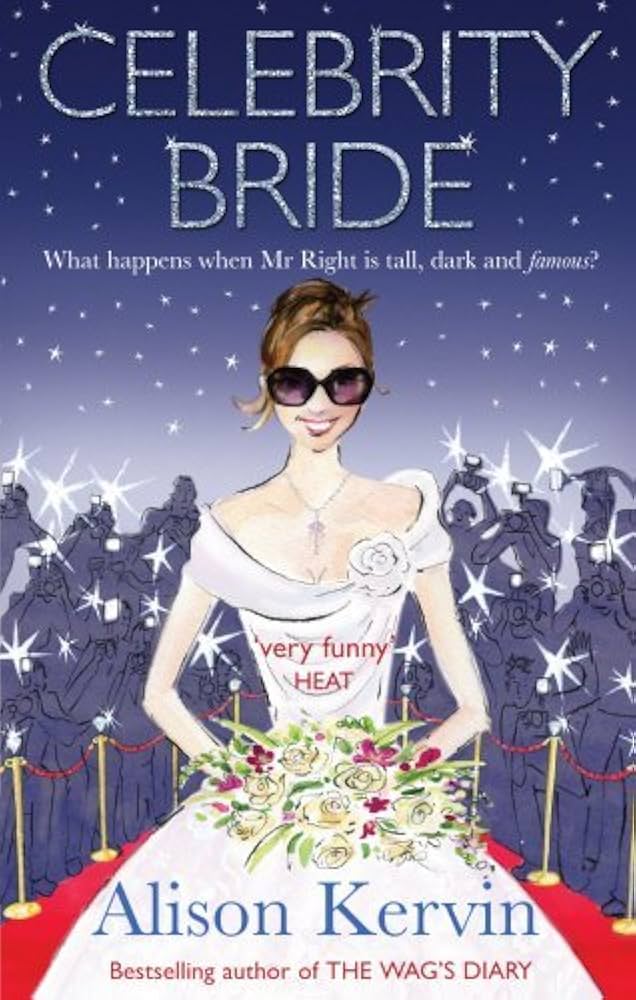
Celebrity Bride
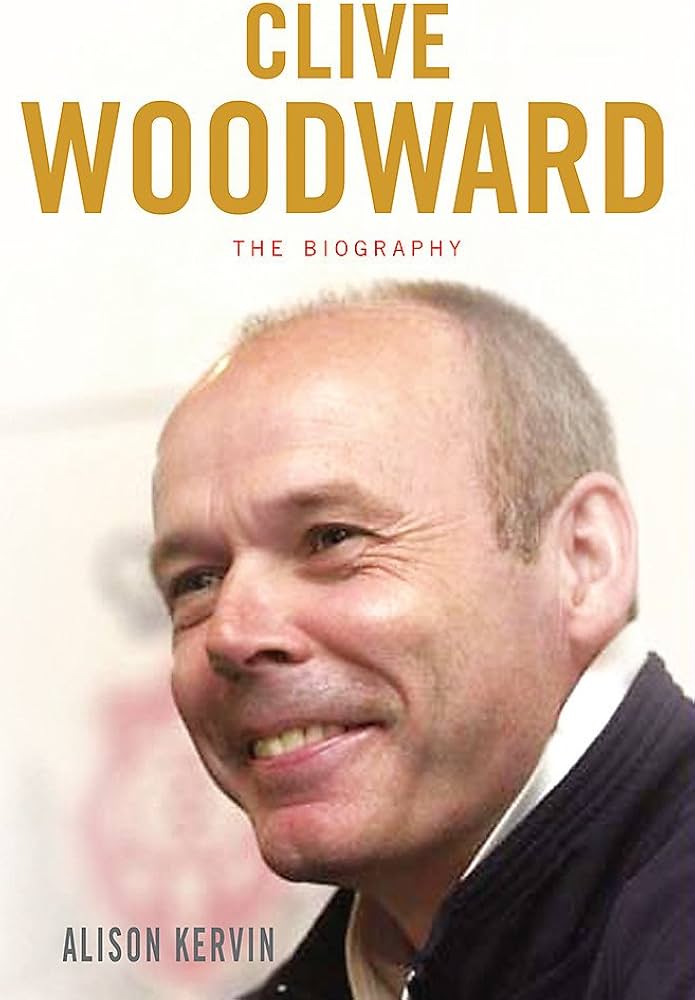
Clive Woodward: The Biography

Hollywood Bride
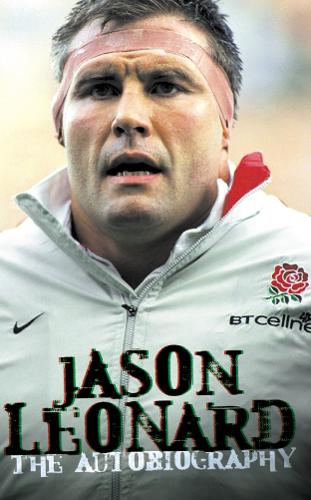
Jason Leonard: The Autobiography

Mother and Son
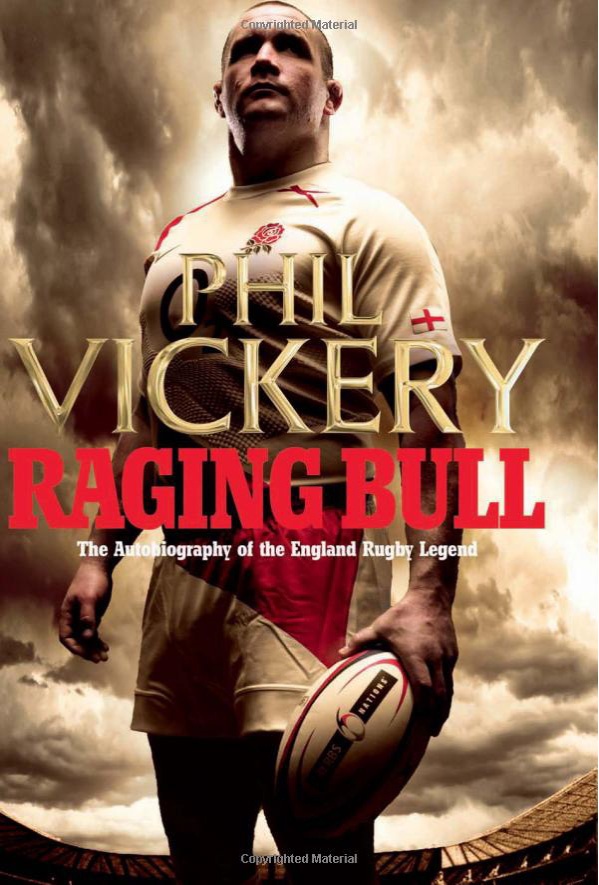
Phil Vickery: Raging Bull

Rugby World Cup 99
The WAG's Diary
Thirty Bullies: A History of the Rugby World Cup
WAGS at the World Cup

WAGs' Guide to Euro 2012
Alison Kervin’s official speaking topics are listed below:
Think Differently
This uses surprising, funny and sometimes moving stories from journalism and elite sport to explore recognising overlooked potential, earning trust and questioning familiar assumptions.
One Woman Can Change Everything: How to Hear “No” and Do It Anyway
This draws on campaigning for women’s boxing, women’s rugby at Twickenham and other occasions when she challenged established thinking.
When Good Organisations Go Wrong
Suitable governance, legal and HR audiences.
One Person Can Change Everything: Why change almost never starts with a committee
Best suited to: International Women’s Day, staff and leadership conferences, women’s networks, awards dinners, opening or closing sessions.
In 1991, Alison Kervin walked out at Twickenham to referee a rugby match. No woman had ever done it. Nobody had told her she could. Nobody had told her she could not either. She had simply asked, and gone on asking, until somebody ran out of reasons to say no.
That turned out to be the pattern of her career. She campaigned for the legalisation of women’s boxing. She fought for women to be allowed to play rugby at Twickenham. She became the first female presenter on Rugby Special, the first woman to be Sports Editor of a British national newspaper, and the first woman to attend a football match in Iran. Then she spent five years on the concussion crisis in rugby, reporting week after week on a sport that would have much preferred the conversation to stop. The protocols changed. She was appointed OBE.
None of it began with permission, a budget or a working group. All of it began with one person asking an uncomfortable question in a room that did not want to hear it and then asking the following week again.
This is a warm and frequently funny talk with a serious argument inside it: organisations are almost never changed by the people with the authority to change them.
What the room takes away:
• That it is possible. This is a motivating and genuinely uplifting session, and audiences leave believing they could start something.
• How to ask the question nobody wants asked and still be in the room afterwards.
• What to do in year three of a campaign, when the momentum has gone and nothing has visibly moved.
• Why the people who shift an organisation are rarely the people at the top of it and how to spot them in your own company.
Formats: 45 minutes or 60 minutes with audience questions. Also available as an on-stage interview.
The Elite Code: What 250 of the world’s best performers do differently when the pressure is real
Best suited to: Leadership and management conferences, NHS and emergency services, senior team away-days, staff conferences, corporate audiences.
Jonny Wilkinson would not leave the training pitch until he had kicked twenty penalties in a row. If he missed the nineteenth, he started again at zero.
That is not dedication in the way most people use the word. It is a standard, held privately, when nobody is watching and nobody would ever know.
Jason Leonard decided that if he was going to make it as an international prop, he would have to work harder than everyone else. So he lifted temporary bus stops, the ones with heavy concrete bases, out of the ground, hoisted them onto his shoulder and ran with them to training. He would put one down, train, then pick up another and carry it back. Years later he joked that the bus drivers in the area never quite knew where to stop because he had moved so many of them. Nobody asked him to do it and nobody saw him do it. He went on to win more than a hundred caps for England, a World Cup, the presidency of the RFU and the chair of the British and Irish Lions.
For forty years Alison Kervin sat opposite Olympic champions, World Cup winners and record breakers, and ended almost every interview with the same question: why were you successful? The answers were remarkably consistent, and they were not what she expected. Not talent. Not tactics. Not luck. She distilled the patterns into five pillars, which together form The Elite Code.
Stuart Broad, bowling in front of hostile Australian crowds in some of the most pressurised atmospheres in world sport, found a fixed point in the stand above the stadium entrance and stared at it before every ball. It had nothing whatever to do with cricket. It was an anchor, something to pull his attention back when everything else was competing for it.
He was not born able to do that. He taught it to himself. Composure of that kind is not a temperament. It is an architecture and it can be built.
An intensive care unit, a control room, a courtroom and a newsroom are all places where people have to think clearly while the consequences are real, and the people who do it best behave in strikingly similar ways.
Nor is any of it confined to sport. Working the returns desk at Marks and Spencer as a student, Alison served an elderly woman who was crying, asking whether she could bring back a suit she had bought for her husband to wear to a wedding. He had died before the wedding. When Alison opened the bag, the suit was from British Home Stores. She asked her supervisor what to do. The supervisor said: ask her what she paid and refund her.
A culture of excellence is not a poster on a wall. It is what happens when nobody important is watching. Every organisation has people doing some version of these things, and most organisations have no idea who they are.
None of this is talent and none of it is temperament. The five pillars break down into twenty-five specific behaviours, every one of them observable, repeatable and learnable. Audiences do not leave having admired a set of champions. They leave with the behaviours, and a clear idea of which one to start with on Monday.
What the room takes away:
• The difference between feeling pressure and being impaired by it, and what elite performers actually do in that gap.
• Why the standards a team tolerates matter more than the standards it publishes.
• Where to look in your own organisation for the unseen work that currently goes unrecognised.
Formats: 45 to 60 minutes as a keynote. Also available as a half-day or full-day workshop
working through the five pillars or as an executive advisory session.
When Good Organisations Go Wrong: Why warning signs get ignored, why good people stay quiet, and what it costs
Best suited to: HR and OD directors, boards and audit committees, safeguarding leads, legal and compliance, policing and the justice system, regulators, professional services client events.
Alison Kervin spent years investigating how one of the most admired institutions in Britain allowed a man to abuse women on its premises for twenty-five years, and how hundreds of ordinary employees, many of whom knew, allowed it to continue.
The Monster of Harrods, her bestselling account of Mohamed Al Fayed's reign at the store, was built on first-hand interviews with the people who worked inside the machine: the HR staff who processed the complaints, the security officers who were told not to see, the technician who maintained the surveillance. Almost none of them thought of themselves as part of it. They were doing their jobs.
Which is why the detail that stays with audiences is not the abuse. It is the ordinary ways in which it was easily covered up. One woman took her complaint to the Harrods HR department and was offered money on condition that she signed a non-disclosure agreement and destroyed the recordings she had kept. She signed. Nobody broke a rule. There was a process and it was followed, and a process that produces silence looks identical, on paper, to a process that works.
The signs were visible for years, and they were ordinary. An unusually high turnover in one department. A complaint settled quietly. A rule that applied to some people and not others. Huge payments made to young women that no one questioned. Supervisors hiding pretty girls when Fayed did his store walks. Any board in the country can recognise versions of those from the inside, once somebody shows them what they are looking at.
From October 2026, UK employers face a duty to take all reasonable steps to prevent harassment at work, including harassment by third parties. Boards are being asked to evidence prevention rather than policy. This talk does not tell a room the law and does not pretend to. It does the harder thing, which is to make a room believe it could happen to them, and to send them back to their own organisation with questions they had not thought to ask.
Alison has watched the same mechanism twice, in worlds that could hardly be less alike. At Harrods the risk was criminal, and the cover was reputational. In professional rugby, where she campaigned for five years on concussion, the risk was medical, and the cover was commercial. The institutions had nothing in common. The pattern of denial was almost identical, which is why she is confident this was never really a story about one man.
The question is never whether somebody knew. It is what happened to the person who said it out loud.
What the room takes away:
- The early signals. What was visible inside these organisations for years before anyone acted and what the same signals look like in an ordinary workplace.
- The workaround test. What it means when an organisation quietly builds a control around a person rather than dealing with the person, and why that is the clearest single signal that something is wrong.
- Why "we have a policy" and "people use the policy" are unrelated facts, and the questions that reveal which is true of yours.
- What it takes for someone to speak up a second time, having got nowhere the first time. This is the number that matters, and almost nobody measures it.
Formats: 45 minutes, or a closed board or executive session. For legal reasons, this talk is delivered from a prepared script and does not include open-floor questions. Where an event wants audience interaction, questions can be submitted in advance and answered within the session.
Feedback from In-Person & Virtual Events
"She has done as much over the years for battling females as any woman since Boadicea." – The Spectator
"Sports and journalism are very difficult areas for women to achieve success in — and to champion both is amazing. Bravo." – Baroness Brady, Vice Chair, West Ham United
"Alison's work on behalf of women in sport has helped break the gender barrier for women on the field of play and in administration." – Lord Sebastian Coe, President, World Athletics
"I've known Alison for over 20 years. She was one of the first women to write about rugby, which at the time was truly groundbreaking. I have always held her in the highest regard because she has never shied away from controversy or been afraid to speak her mind and became a role model for women working in a historically male-dominated environment." – Sir Clive Woodward, World Cup-Winning Coach
"Alison is a hugely impressive figure in the sports world with a sporting pedigree few sports editors can rival. Of course, it really doesn’t matter whether The Mail on Sunday’s sports editor is a man or a woman – but I can think of no better candidate to break the mould than Alison." – Geordie Greig, Editor, Daily Mail
"Alison is a trailblazer in the sports industry. Not only is she a fantastic journalist and writer, she has pushed the boundaries in becoming one of very few female sports editors in the world." – Gabby Logan, Television Presenter
"I'm thrilled Alison's achievement in being the first female sports editor of a national newspaper has been recognised and hope it encourages many more women into sports journalism." – Clare Balding, Television Presenter
"Alison knows the job inside out and back-to-front and it's a pleasure to work for her." – Stuart Broad, England Cricketer
- 2025 - Published 'The Monster of Harrods: Al-Fayed and the secret, shameful history of a British institution'
- 2025 - Launched Gold Medals
- 2025 - Featured speaker and workshop lead at public resilience events linked to the Women’s Rugby World Cup
- 2021 - Completed eight-year tenure as Sports Editor, Mail on Sunday
- 2017 - Awarded Officer of the Order of the British Empire (OBE)
- 2013 - Appointed first female Sports Editor of a UK national newspaper
- 2005 - Founded Gold Medals Media
- 2003 - Became Chief Sports Feature Writer, The Times
- 1994 - Appointed Editor of Rugby World magazine
- 1991 - Became first woman to referee a rugby match at Twickenham
How to hire Alison Kervin
Contact the Champions Speakers Agency to provisionally enquire about hiring Alison Kervin for your next event, today. To get in touch, simply call an official booking agent on 0207 1010 553 or email us at [email protected] for more information.
** We do NOT accept requests for autographs, signed merchandise, fan mail, birthday messages or any other non-commercial contact with the speakers or acts. Each speaker on the website may not have necessarily worked with Champions in the past but are known to perform such engagements within the industry.